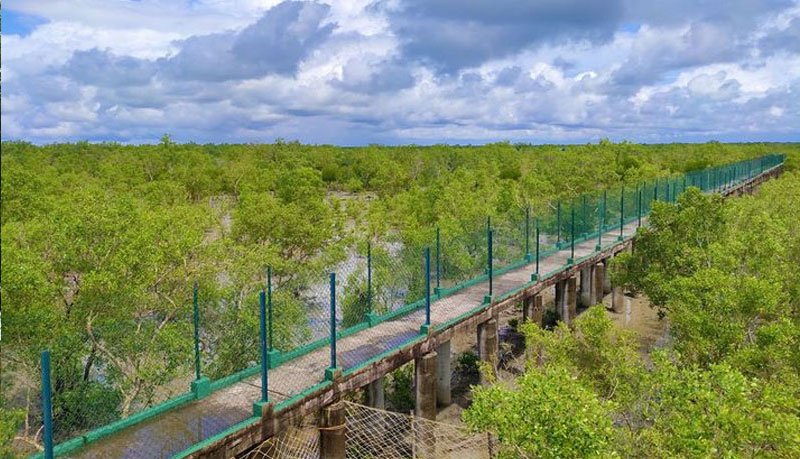
 A Royal Bengal Tiger spotted near Sudhanyakhali sweet water pond
The Thrill of the Wild Royal Bengal Tiger
Sundarban tigers are unique in the entire world. Unlike their cousins in Ranthambore or Bandhavgarh, Sundarban tigers are powerful swimmers, drinking saline water, navigating daily high and low tides, and hunting across muddy mangrove terrain.
Key Factors That Increase Sighting Chances
While wildlife sightings can never be guaranteed, following these expert guidelines drastically improves your odds:
- Timing the Tides: Low tide is the best time for sightings. When water recedes, muddy riverbanks and mudflats are exposed, where tigers often walk or swim across creeks to change islands.
- Absolute Silence on Boat: Sound carries very far across calm river waters. Keep mobile phones on silent, speak in hushed whispers, and avoid sudden movements when the boat engine slows down.
- Watchtower Waterholes: Sweet drinking water is scarce in the saline delta. The Forest Department maintains freshwater ponds in front of Sudhanyakhali and Netidhopani watchtowers, drawing tigers during warm hours.
- Listen to Jungle Alarm Calls: The sharp, frantic bark of a spotted deer or the warning screech of a rhesus macaque signals a predator on the prowl.
Recommended Gear for Tiger Photography
- Telephoto Lens: A 100-400mm or 150-600mm lens is essential as boats keep a safe distance from shorelines.
- Binoculars: An 8x42 or 10x42 binocular helps spot camouflaged movement behind dense Phoenix and Sundari bushes.
- Rain Cover & Dust Protection: Keep your camera sealed when traveling through windy river bends.